When water turns to fire
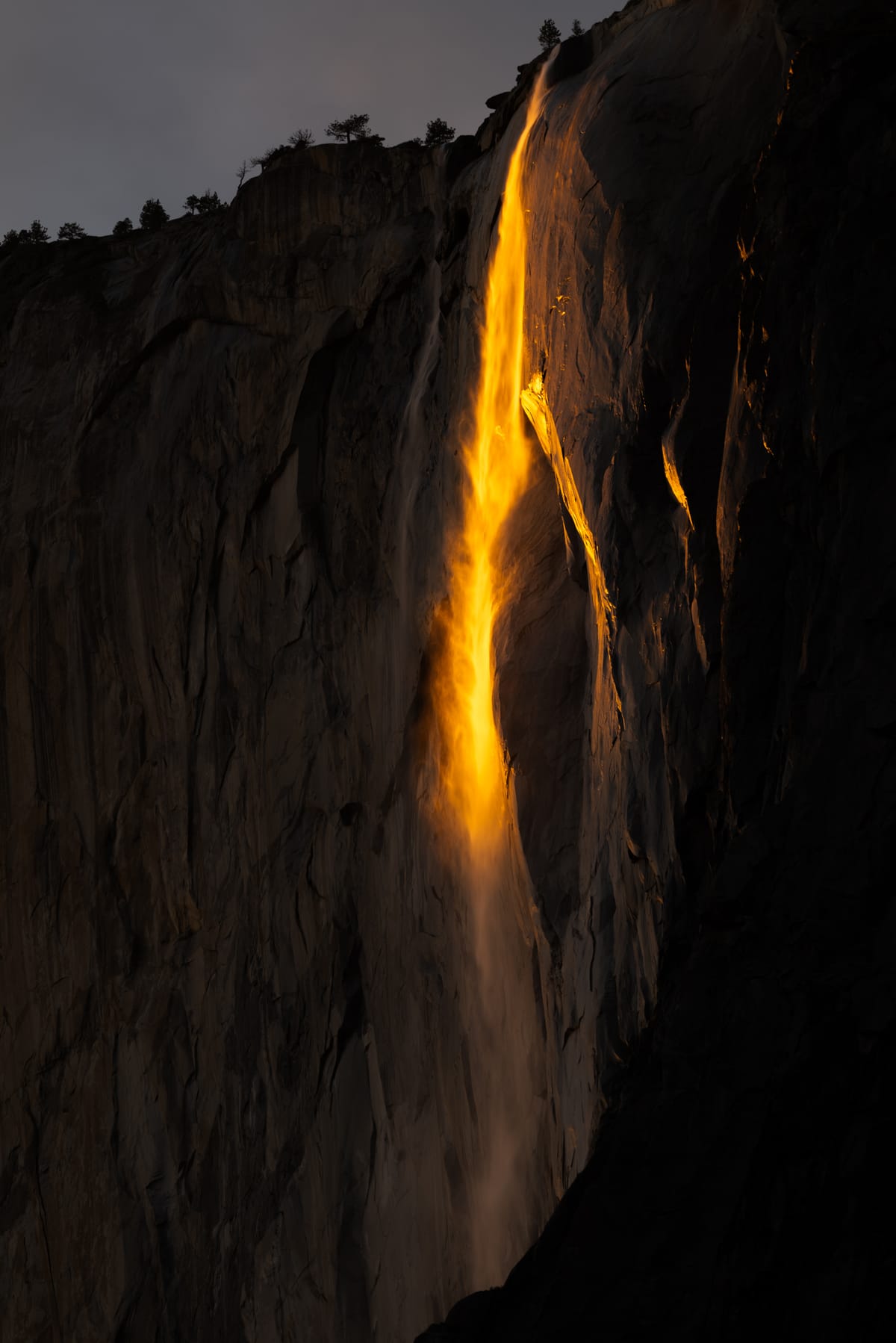
In February 1973, the photographer and mountaineer Galen Rowell made an image that would become one of the most iconic photographs of Yosemite Valley. His photograph revealed what is now known as Yosemite Valley’s natural firefall, when the thin ribbon of Horsetail Fall briefly ignites with the light of the setting sun as it descends in the western sky. For a few fleeting minutes, the water appears to glow like molten lava against the dark granite wall.
Rowell described the making of that photograph in his book Mountain Light. Years later - in the early 2000s - I remember standing in his gallery — first in Emeryville and later in Bishop — looking at a print of that image. I was struck by the sheer visual power of the phenomenon: water transformed by light into something that seemed almost elemental.
Three conditions must come together for this spectacle, which appears only in the latter half of February.
First, there must be enough snowpack. Horsetail Fall is an ephemeral waterfall fed by snow on top of El Capitan, so the winter must have brought sufficient precipitation.
Second, temperatures must be warm enough for that snowpack to melt and feed the narrow stream of water that spills over the cliff.
Finally, the western sky must be clear at sunset. Only then can the low winter sun strike the falling water at just the right angle, turning the cascade into a ribbon of glowing orange light.
In February 2025, I made three trips to Yosemite hoping to witness this moment. Each time, clouds gathered on the western horizon just as the sun was about to set, blocking the light and leaving the fall in shadow.
This February, I was finally in the right place at the right moment.
And I watched the water ignite.